Rock Ballads to Sing Tonight

Must-Try Songs for Vocalists
Rock power ballads mix deep feelings and chances to show off your voice. These picked songs will boost your singing skills and make your shows unforgettable.
Easy Ballads for Beginners
“Faithfully” by Journey is great for starters, with a calm pace that helps you learn how to breathe right. The tune’s flow gives a good base for steady voice work.
Choices for Intermediate Singers
To get better at mid-range control, try these hits:
- “Every Rose Has Its Thorn” by Poison
- “More Than Words” by Extreme
These songs focus on clear voice use and feeling, without needing a wide range.
Hard Songs for Advanced Singers
To grow your voice range, sing these strong songs:
- “Alone” by Heart – Great for high notes
- “Dream On” by Aerosmith – Good for voice power work
Tips to Get Better
- Record how you sing to see your progress
- Work on specific parts to improve
- Watch your song feelings and how loud or soft you sing
- Practice breathing right
These rock ballads are great for growing your voice skills and are loved by people everywhere.
Classic Rock Ballads: The Best Guide
Rock Ballad Basics
Power ballads are key in rock music’s most touching moments.
Journey’s “Open Arms” is a lesson in growing emotions, while Aerosmith’s “Dream On” shows amazing voice work and true feeling.
Guns N’ Roses’ “November Rain” tells a big story with high points, a top example of bold rock ballads.
Skills from the ’80s
Foreigner’s “I Want to Know What Love Is” changed the style with its gospel sounds and big chorus, making the rock ballad way.
Whitesnake’s “Is This Love” shows the main voice ways of the ’80s. 호치민 퍼블릭가라오케 추천받기
Heart’s “Alone” has Ann Wilson’s strong singing, a high mark for rock ballad strength.
Bon Jovi’s “Living on a Prayer” perfectly merges daily life tales with a sudden key change, showing the ideal rock ballad setup.
Writing and Making Ballads
The set rock ballad form has many parts:
- Drama that grows tension
- Sad or loving words that reach the heart
- Tunes that build to show off the voice
- Key changes that grab you
- Big choruses
- Guitar tunes
- Big band sounds
These parts make the strong, touching shows seen in the best rock ballads ever.
Building Your Voice: A Full Guide
Starting with Your Natural Sound
Growing your voice range starts with knowing your natural voice type and limits.
The key to keep getting better is to move up slowly using good ways to sing and practice often.
Start with songs that are easy to sing, then slowly try harder ones.
Reaching Higher Notes
For bigger voice range, pick songs and exercises carefully. The best songs for high notes:
- Bon Jovi’s “Bed of Roses” – Great for high, soft singing
- Journey’s “Open Arms” – Helps with going higher smoothly
- Queen’s “Somebody to Love” – Tests how flexible your voice is
Going Lower
Training your deep voice is key for full voice skill. Songs to try:
- “November Rain” by Guns N’ Roses – Uses deep, strong notes
- “Without You” by Motley Crüe – Makes your chest voice stronger
- “Hurt” by Johnny Cash – Works on deep, echoing notes
Important Practice Parts
Good singing ways depend on:
- Using your diaphragm to breathe
- Keeping your body right
- Recording your voice to see how you’re doing
- Drinking enough water and resting your voice
- Getting a coach to help you in special ways
Do these things every day, stay in the right singing form, and breathe well.
Keep track of your growth with recordings and change how hard you train as needed, based on how tired your voice gets. Best Karaoke Bars for
Deep into Rock Ballad Lyrics
Feeling the Words in Rock Shows
Deep feelings in rock ballads come from really linking with the words.
The best shows happen when singers really get the song’s story and find their own meaning in each line.
True feeling comes out when you connect with the story about love, losing, winning, or wanting.
Making It Personal with Songs
Digging into the words sets the base for strong rock shows. Before singing a ballad, singers should:
- Get the main idea of the song
- Find parts in the words that touch them
- Link lines to their own life
- See the song’s emotional path
Top Ways to Sing Well
Understanding the song takes both knowing how to sing and real feeling. When taking on big ballads like “November Rain,” skilled singers:
- Look at how the original is sung
- Mark important points to stress
- Find new ways to show feeling
- Use their own life in their singing
Real Shows That Touch People
Real feeling is more important than perfect voice work in rock ballads. The most moving shows come when singers:
- Turn their own stories into singing
- Keep a true feeling link
- Show real emotion in how they sing words
- Grow their voice power as the feeling gets strong
Reaching Out to People
Touching the crowd makes the show better. When singers really live their lyrics, people feel:
- Deeper into the song’s feeling
- A stronger link to the show
- A bigger hit from the music
- A memory that stays with them
Easy Rock Ballads for New Singers
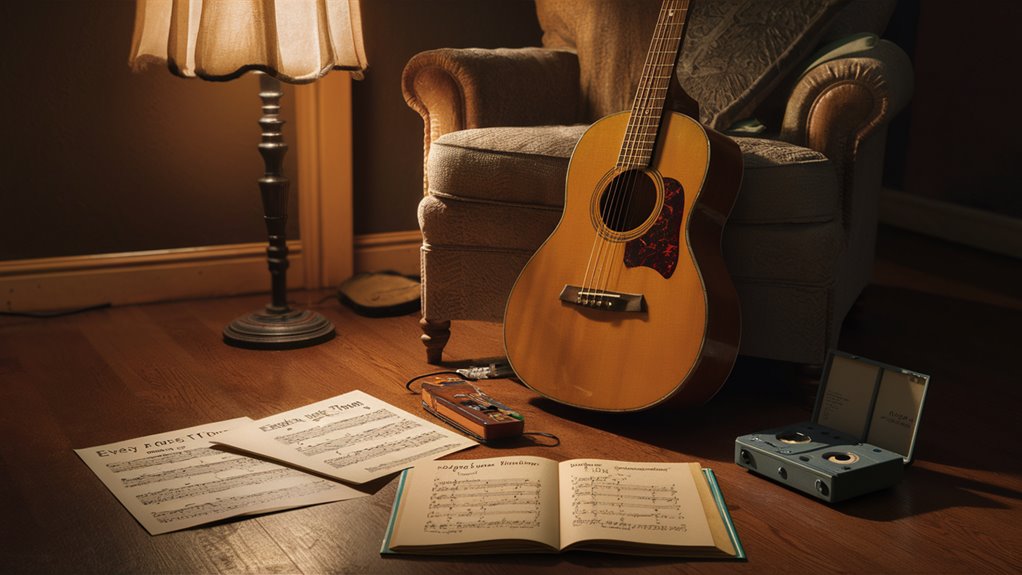
Starting Your Singing with Classic Rock
Picking the right easy rock ballads is key for learning to sing well and feeling sure in your voice.
The best first songs have easy tunes and simple voice parts to help new singers get started.
Top Rock Songs for Starters
Basic Songs for New Voices
“Every Rose Has Its Thorn” by Poison works well to begin, with easy beats and mid-range singing that fits most new singers.
Journey’s “Faithfully” is great to practice on with its smooth pace and easy tune, perfect for getting used to singing well.
Learning to Breathe While Singing
Aerosmith’s “I Don’t Want to Miss a Thing” has clear spots to breathe and a set verse-chorus form, making it good for learning how to support your breath.
The song’s speed lets new singers work on holding notes and keeping their voice steady.
Getting Pitch Right
“More Than Words” by Extreme is a great base for working on pitch, as its simple guitar backing helps singers stay on key.
Guns N’ Roses’ “Patience” starts easy and gets harder, letting you work up to more complex singing.
What Makes These Songs Work
These easy songs have key parts:
- Clear word flow
- Not too fast
- Not too hard to sing
- Good clear tunes
- Voices anyone can reach
Next Steps in Rock Singing
Key Rock Singing Ways
Big rock singing skills change basic singing to star-level shows.
Controlled rough sounds make a real rock sound while keeping your voice okay.
Using mixed voice makes smooth moves between deep and high singing, key for singing like big stars like Steven Tyler and Chris Cornell.
Loud Singing and Key Voice Work
Big singing needs you to control how you sing and keep your voice safe while making a big sound.
Using vibrato right shows feeling, while voice squeezing helps hold high notes without hurting your voice.
Strong breathing work sets the base for keeping strong during hard song parts.
Controlling Your Voice in Rock
Being able to control how loud or soft you sing lets you change up your voice in shows, making big moments.
Key rock voice extras include:
- Controlled voice slides
- Right times to drop your pitch
- True rock yells
- Tone squeezing
- Long strong notes
Getting these big rock voice moves right takes a lot of practice in the right way, making sure your voice stays healthy while you build your own rock sound.
Rock Duets: How to Master Them
Top Duet Songs for Getting Better
Rock history has strong duets that are great for learning.
These picked songs help with key skills in harmony, staying on key, and showing off on stage.
5 Top Duets for More Skills
1. “Stop Draggin’ My Heart Around” – Stevie Nicks & Tom Petty
Learn basic back-and-forth singing with this hit. The matching voice parts give good practice for matching pitch and even tones.
2. “Under Pressure” – Queen & David Bowie
Build better harmony skills with this hard song. Its complex voice work pushes singers to keep exact timing while singing tricky tunes.
3. “Don’t Give Up” – Peter Gabriel & Kate Bush
Great for better feeling in singing and controlling how loud or soft you sing. This duet shows how to use controlled sound levels and real feeling.
4. “I Got You Babe” – Sonny & Cher
Work on perfect pitch matching and right timing. This duet needs great timing together and teaches basic mixing of harmonies.
5. “Paradise by the Dashboard Light” – Meat Loaf & Ellen Foley
For those who can already sing well, try show-like singing and big voice changes. This long duet shows a story with varied voice power.
Ending Rock Ballads: Top Guide
Classic Ballad Endings
Rock ballad endings are the peak moment of a song, needing top voice control and art skill.
The biggest endings usually show hard voice skills and exact power use that make moments no one forgets.
Three Must-Know Ending Styles
- The Long Strong Note
- As seen in Aerosmith’s “I Don’t Want to Miss a Thing”
- Needs great breath work
- Shows off how long and steady you can hold a note
- The Quiet Fade-Out
- Shown in Journey’s “Open Arms”
- Focus on gentle quieting
- Needs exact sound level control
- The Big Sudden Stop
- Makes a strong, quick ending
- Needs perfect timing
- Brings out big feelings
Tech Skills for Mastering
Breathing Right
- Basics of using your diaphragm
- Control during long notes
- Handling breath support well
Controlling Your Voice
- Keeping pitch right during long notes
- Using vibrato
- Mastering loud and soft changes
How to Use the Mic
- Keeping the right distance
- Handling top volume moments
- Avoiding sound bursts in big parts
Getting Your Performance Better
Start with songs that fit your voice range well, then slowly try harder ones.
Work on keeping your pitch right while using sound changes to boost the feeling of your show.